
DO NOT OVERHEAT THE GAS TANDOOR
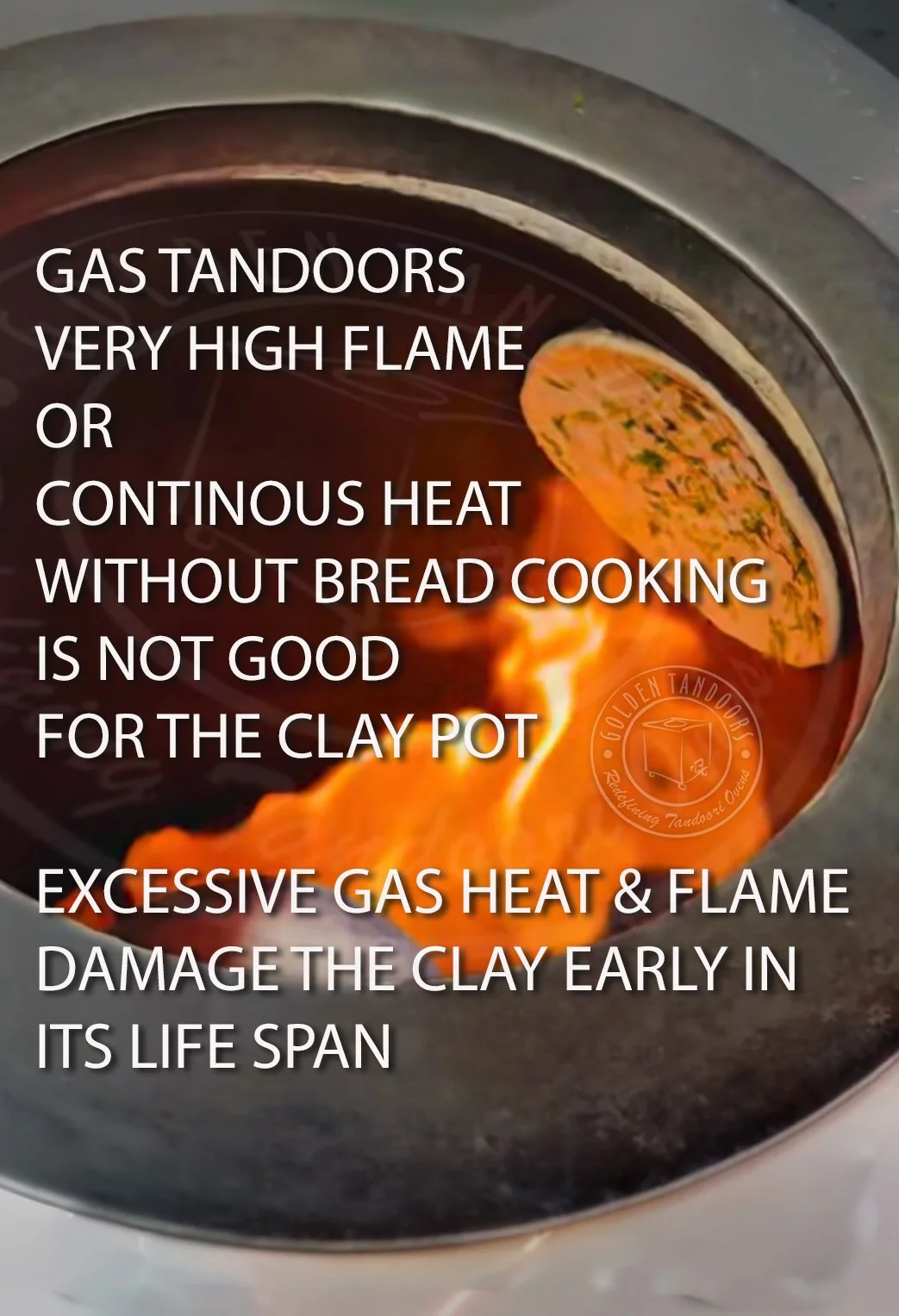
GAS TANDOOR OVER FLAME IS NOT GOOD FOR CLAY POT
THE SHIFT FROM CHARCOAL TANDOOR TO GAS TANDOOR
The shift from charcoal tandoor to gas tandoor was imminent the world over and it happened sooner than expected but what did not align with the shift was the training and the learning of the tandoori chef.
We supply thousands of commercial gas tandoors each year to markets ranging from North America to the New Zealand and most of the chefs we see have not adjusted well to the gas tandoor in comparison to the charcoal tandoori cooking they learned and refined their skills for decades.
DIFFERENT TANDOOR FUEL REQUIRES SOME TECHNIQUE
Its not only about the taste as most talk about – it’s the fuel medium and how it plays with it. Charcoal is subtle with a very high calorific value but the flame is not high but the heat it whereas gas in a tandoor oven is all about hot gases moving out at a great speed making it difficult to cook tandoori food.
A tandoor oven is not a convention or convection oven, with a tandoor running on charcoal the primary air and the secondary air requirements are very least with the exhaust being an issue handling smoke but that too at the initial burn stage. In a gas tandoor things change – it requires primary air to burn clean and secondary air for it to perform thus a lot of cold air going it and a huge amount of hot air circulating inside the large curved belly of the tandoor and moving out from the smaller diameter at the top which is the tandoor mouth. This makes it difficult for the tandoori chef to put his hand and arm to slam the cold dough on the hot walls of the tandoor oven.
With the charcoal tandoor controlling heat was just a play of controlling the air coming in from the top of the mouth of the tandoor as the side door of the tandoor was always sealed tight ensuring that no more air comes in from the bottom hitting the charcoal and burning it more than it is required. This created a heat resilience in the tandoor thus always keeping the walls hot making it easier for the chef to cook naan and breads nonstop whereas in a gas tandoor the chef plays with the gas at full throttle to generate heat on the walls as most of the heat generated escapes through the top mouth of the tandoor.
GAS TANDOORS ARE NOT CONVENTION OVENS
The mouth in a gas tandoor cannot be sealed cause that would create blockage of the secondary air and retain bad unburnt gases inside the tandoor making it unhealthy for the food being cooked in the gas tandoor plus also delivering more carbon monoxide in the working kitchen which is not good for any human being. This is the main reason that with all gas tandoor ovens we supply mouth covers that cannot seal the tandoor ensuring that the hot gases keep moving out of the tandoor.
MISTAKES THAT REDUCE THE LIFE OF THE CLAY POT IN A TANDOOR OVEN
The biggest mistake that most tandoor operators and users make in a gas tandoor is that they use the tandoor at full heat and full flame all the time. Unlike charcoal tandoor where excessive amount of charcoal can still burn low instead of lean the gas tandoor hot gas keeps swirling inside the belly and keeps hitting the walls before it moves out. Especially when tandoori cooking is not being done the empty tandoor gas heat reduces the life of the clay pot.
UNDERSTAND THE DIFFERENCE BETWEEN A CHARCOAL AND GAS TANDOOR
Simple comparison would be a hot air blower directed to a house wall compared to a heater with no blower. The paint on the wall would chip away with the hot air blower much sooner than it would ever be with a heater with no air delivery.
There are two main unfortunate situations to a gas tandoor oven. One is that most suppliers and manufacturers provide a charcoal tandoor with gas fitting and then expect it to run and deliver and second being that a gas tandoor requires a different design for air flow thus requiring much more insulation on all sides including the top and the bottom. To compensate for the bad design for a gas tandoor and to overcome the heat loss due to no or less insulation the gas tandoor user simply keeps the tandoor at full flame. This not only uses a lot of gas fuel, heats the kitchen more, does not result in good tandoor food taste and quality and worse it reduces the life of the clay pot.
The early age deteriorating clay pot demands more repair and maintenance thus the user ends up using more masala putting frequency which further deteriorates the life span of the tandoor clay pot.
SIMPLE SOULTIONS TO GET THE BEST OUT OF YOUR GAS TANDOOR & INCREASE ITS LIFESPAN
- Train the new chefs to use a gas tandoor with low flame unlike in India where the training on gas tandoors is done on high flame high pressure burners.
- Gas is country based and each owner operator needs to guide the tandoori chef that the gas and the gas systems in these countries other than India are with low pressure high heat so its not the high flame that does the heat but the high heat of the burner
- Owner operators should also ensure to buy a gas tandoor with an authentic clay pot and not just a charcoal tandoor that has gas burner fitted in it.
- We try our best to mark on each gas tandoor not to overheat it, but chef’s and owners should also post it right next to the tandoor as a reminder of not to overheat and run the tandoor on full heat especially when not doing breads nonstop